


Prehistoric Monuments on Anglesey

Anglesey is a small island shrouded in history, dating back to the Neolithic period. Archaeological evidence of its prehistoric past is plotted amongst the beautiful landscape for all to visit and admire the effects of time.
Barclodiad y Gawres
One of the prehistoric remains here on Anglesey is the Neolithic cruciform passage grave known as Barclodiad y Gawres which translates to ‘The Giantess’s Apronful’. The translation originates from an ancient legend recounting the tale of a giant woman who carried a number of stones in her apron, which she then dropped to the floor.

The excavation in 1952-53 revealed an impressive structure with intricate patterns of spirals and zigzags carved amongst the stones. The discovery of these carved stones revealed the evidence of Anglesey’s early inhabitants.
The cruciform shaped tomb was found to be a site used for burials and rituals after the cremated remains and discovery of bones were discovered in parts of the chamber, along with animal bones.
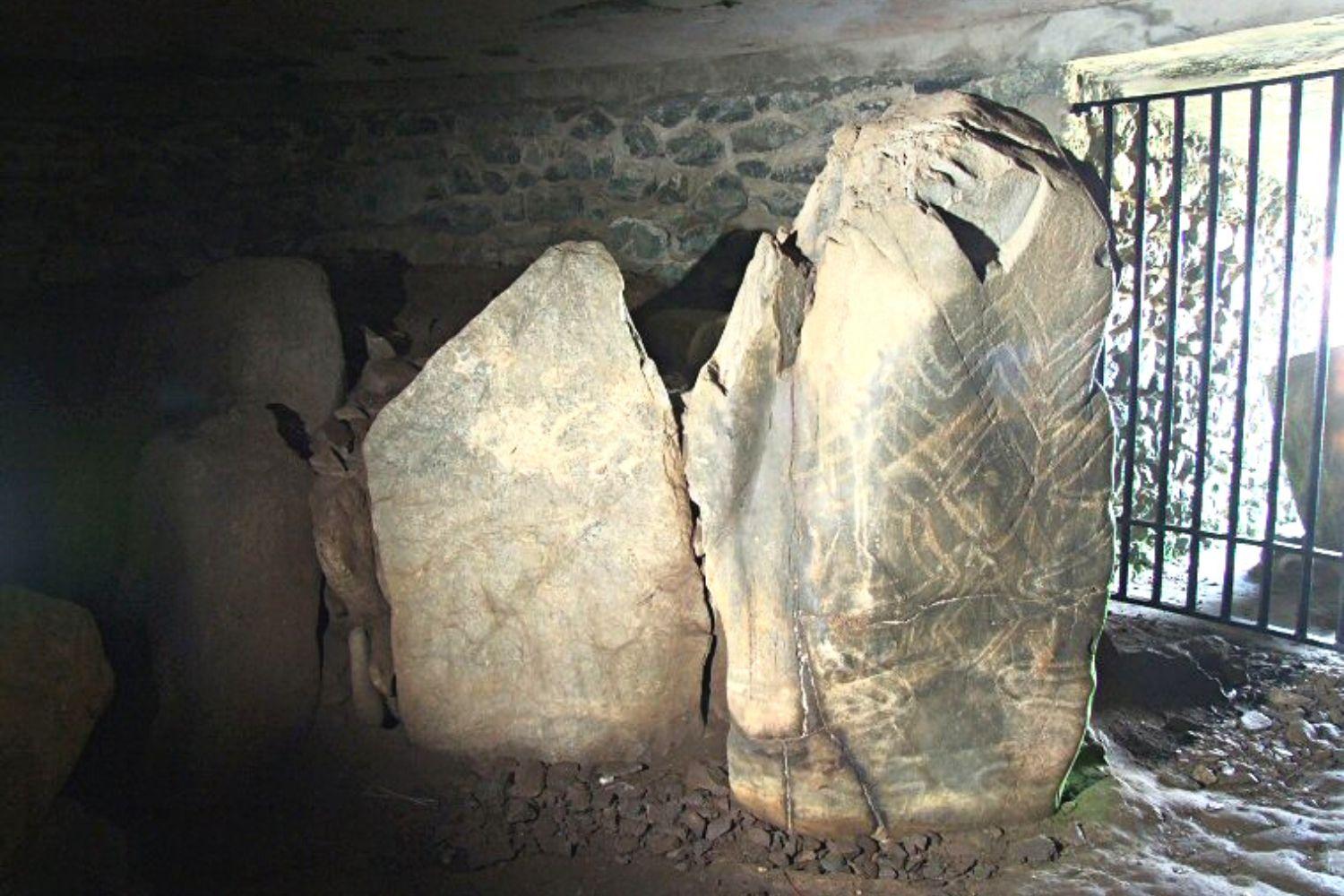
After the excavation, the chamber was reconstructed with a roof and a grassy mound in an attempt to recreate how it would have looked to our ancient ancestors.
Bryn Celli Ddu
Bryn Celli Ddu, which translates to ‘Mound in the Dark Grove’, is one of Anglesey’s most famous landmarks. Bryn Celli Ddu is a Neolithic chambered tomb which bares the evidence of two time periods.
This prehistoric landmark was previously the site of a henge which would have been the space for rituals. Its structure was similar to that of other henges during the Neolithic period with an enclosed circle of stones.
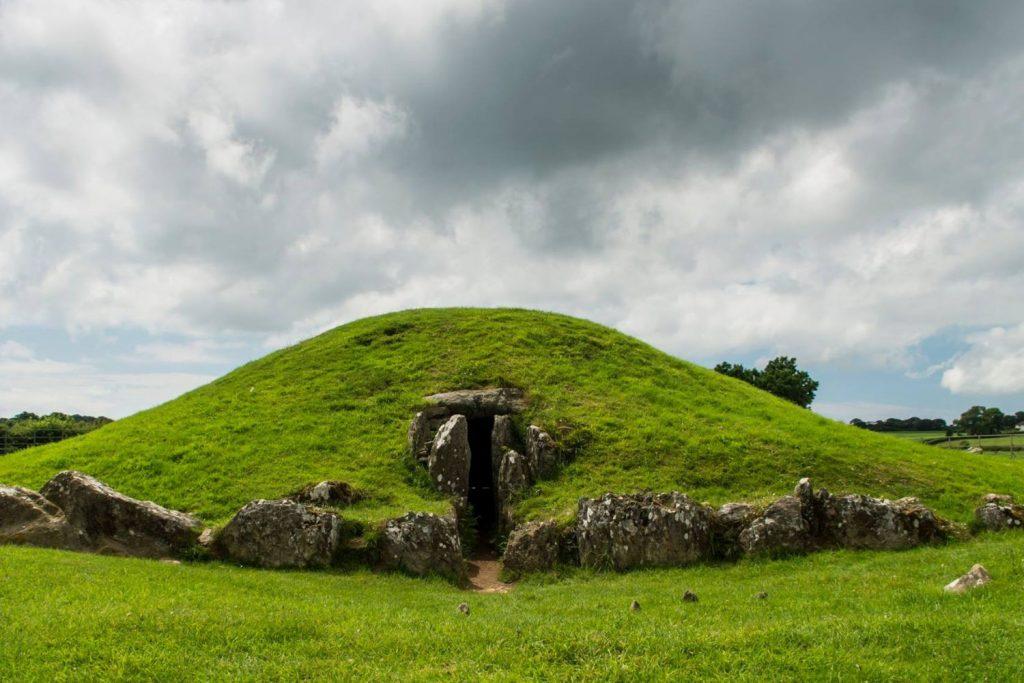
Around 1000 years after the henge was built, it was replaced by a chambered tomb which was situated beneath a mound. Artefacts have been discovered at Bryn Celli Ddu such as human bones, arrowheads, and carved stones which have intricate and unique patterns on them, similar to those found at Barclodiad Y Gawres

Bryn Celli Ddu has a spectacular feature that is definitely a once in a lifetime experience, which can only be witnessed once a year during the summer solstice. As the sun rises during the summer solstice, a beam of light will shine directly through the passage way of the tomb and illuminates the history inside. During this time, people will gather at the site to celebrate to mark the spiritual significance.